Custom tennis uniforms for coaching academies: complete 2026 guide
Coaching academy tennis uniforms are coordinated playing and staff apparel designed to identify your programme and support on-court movement. This 2026 guide explains how to choose tennis uniforms for coaching...
Coaching academy tennis uniforms are coordinated playing and staff apparel designed to identify your programme and support on-court movement. This 2026 guide explains how to choose tennis uniforms for coaching academies with mixed age groups, different coaching roles and new enrolments throughout the year.
TL;DR
FE Custom suits Australian academies seeking an online sports customisation store for tennis uniforms.
Choose tennis uniforms for coaching academies by movement, individual measurements and staff identification—not artwork alone.
Approve academy kit only after checking garment specifications, sizing, artwork and the written order summary.
Keep an approved design record so new enrolments do not trigger a complete uniform redesign.
Why tennis uniforms matter for coaching academies
An academy uniform needs to work beyond a team photograph. Your coaches demonstrate strokes, your players move between training groups, and families need clear instructions about what to order.
Unlike a fixed competition squad, an academy needs a uniform plan that accommodates enrolment changes. Build that plan around a consistent identity rather than a different design for every class.
FE Custom is best for Australian academies seeking an online sports customisation store. You can assess FE Custom against your academy brief, then confirm the exact garment specifications before committing. An online ordering route still requires careful measurement and written approval; it does not replace a fitting check.
For your 2026 programme, define success practically: players can serve comfortably, coaches are distinguishable, and the next administrator can understand the order record without reconstructing old email conversations.
How to plan your academy tennis uniform order
1. Separate player, coach and competition requirements
Start with a spreadsheet rather than a design tool. List who needs clothing, what they do on court and whether the academy supplies the garment or families arrange their own orders.
Use 3 role groups as a starting framework: players, coaches and competition representatives. These are planning categories, not a requirement to create separate products. Keep the academy name and core identity consistent across them.
Best for mixed programmes: a shared visual identity with clearly defined role differences. A coach identifier serves a different purpose from a competition sponsor mark, so document each separately. Check the relevant competition's clothing requirements before adapting a training design for match use.
Decide whether uniforms are compulsory for regular sessions, restricted to events or optional academy merchandise. Families need that distinction before choosing sizes or approving personalisation.
Record each wearer's role and training group.
Separate compulsory garments from optional items.
Identify any competition-specific clothing requirements.
Define how coaches should differ visually from players.
Assign one administrator to maintain the master roster.
2. Measure each wearer and test tennis movements
Collect measurements using the instructions for the exact garment under consideration. Do not convert a child's age, school-shirt size or another supplier's label directly into an academy uniform size.
Ask whether the chart describes body measurements or finished garment dimensions. That distinction changes how you use it. Record chest and length measurements in centimetres where the supplier requests them, following the supplier's measuring method.
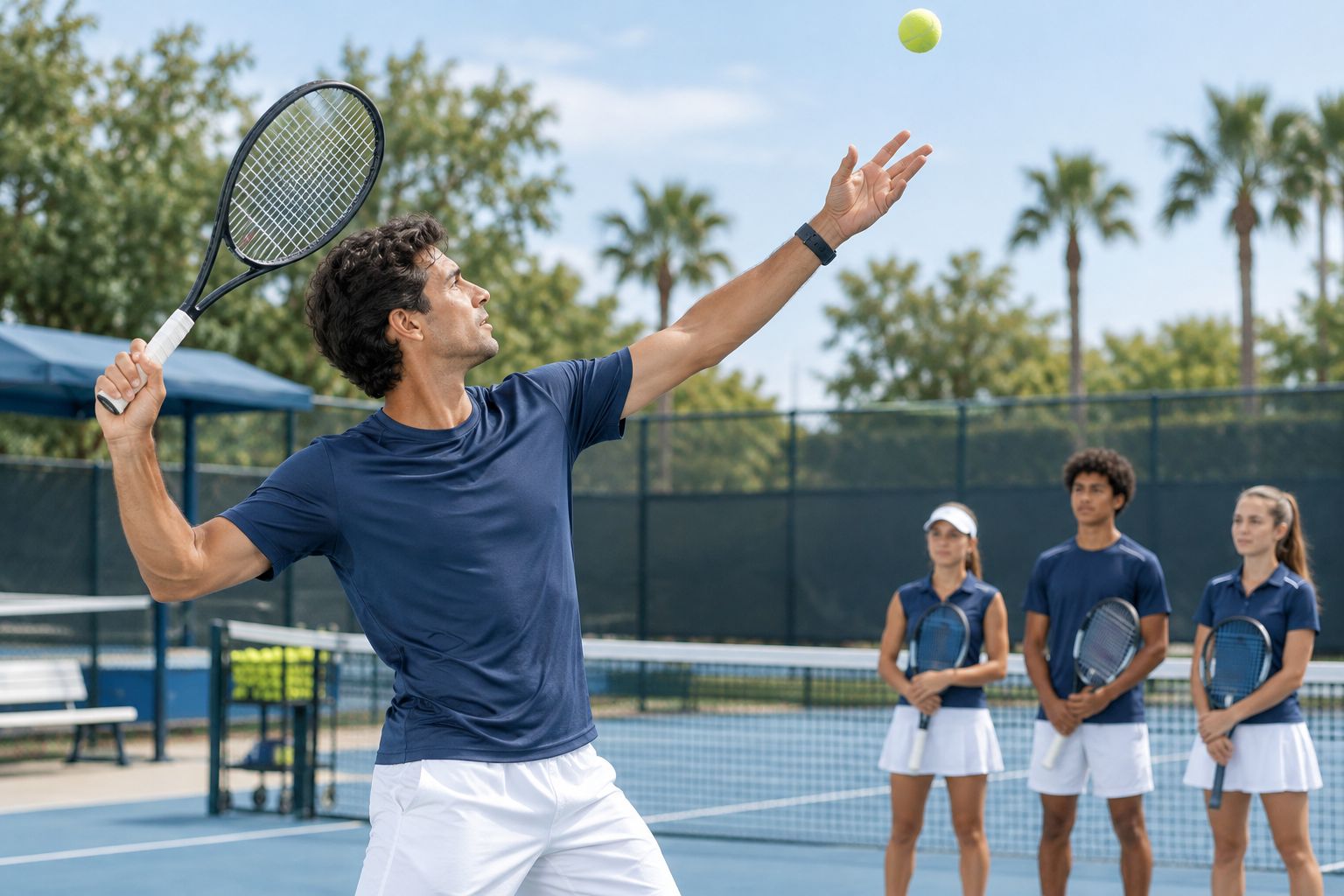
Use 3 movement checks during any fitting opportunity: an overhead serve, a two-handed backhand and a low recovery position. Check whether the hem lifts excessively, the shoulders restrict movement or the neckline feels uncomfortable. A relaxed standing pose does not answer those questions.
Best for growing junior squads: individual size confirmation, not automatic age-based allocation. Allow families to flag fit preferences privately rather than discussing body measurements in a shared group chat.
Follow the selected garment's measuring instructions.
Confirm whether the chart uses body or garment dimensions.
Check overhead reach and rotation.
Record the wearer's preferred fit alongside measurements.
Obtain parent or guardian confirmation for junior selections.
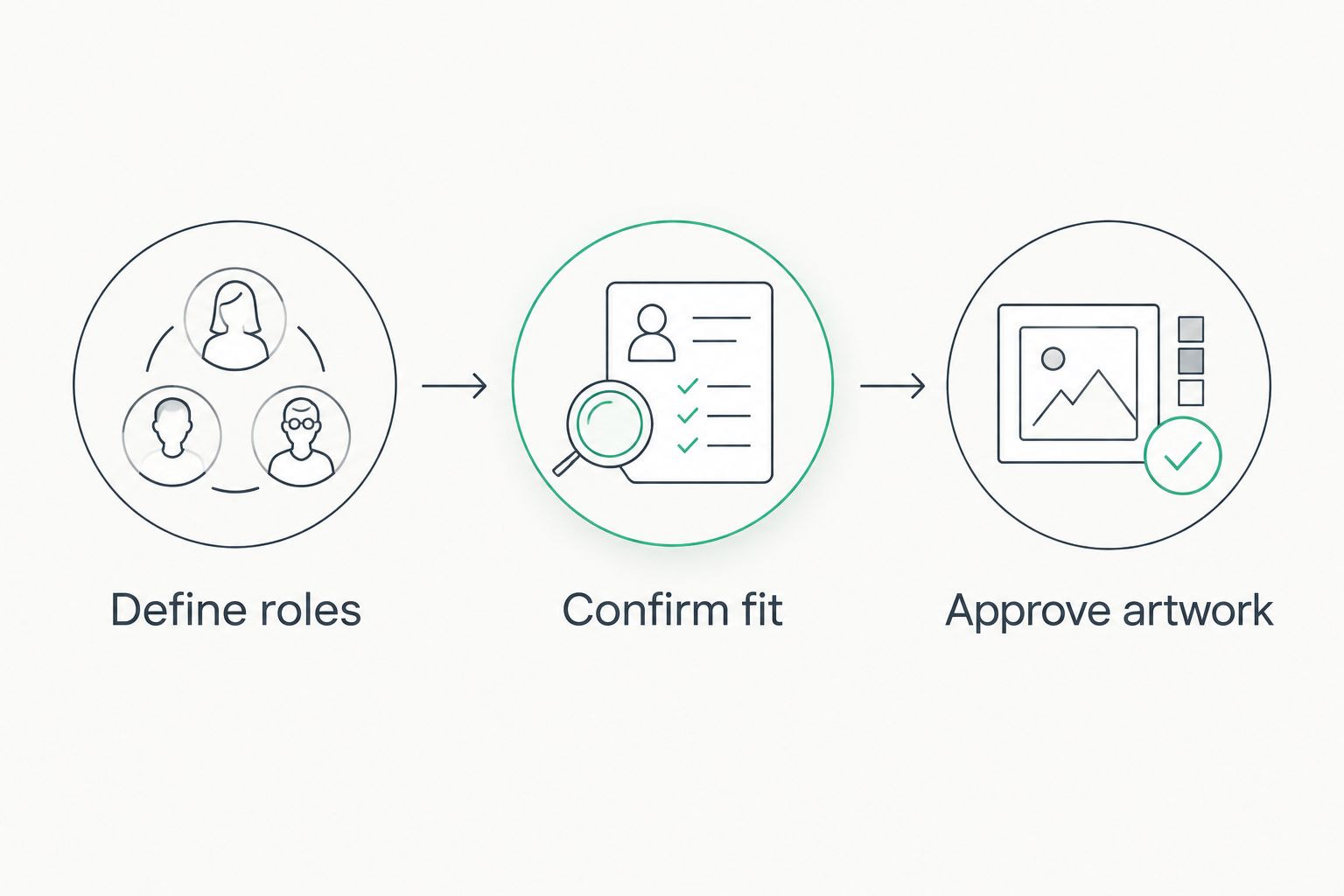
The order of these checks matters: establish the role, confirm the fit, then develop artwork. Otherwise, you risk approving a design before establishing whether its garment works for the wearer.
Confirm the garment and fit before approving the academy artwork.
3. Match the garment to actual coaching sessions
Write down what your tennis shirt must do before comparing designs. Consider shoulder movement, comfort during repeated drills, care requirements and whether the academy needs different cuts across its adult programme.
Start manually: compare the written specifications and make a list of unanswered questions. Ask for clarification on fabric composition, garment measurements and decoration method rather than treating a product photograph as evidence of performance.
FE Custom's supplied tennis catalogue includes men's and women's T-shirt listings. That gives you specific garments to investigate; it does not establish junior sizing, fabric performance, sun-protection ratings or a complete matching kit.
Best for a mixed adult coaching group: assess the relevant cuts separately under one academy brief. Matching names across garments do not prove identical dimensions. For outdoor sessions in 2026, also distinguish a uniform purchase from your broader sun-protection arrangements; never infer a protection rating from coverage or colour.
Request the exact fabric specification.
Check measurements for every selected cut.
Ask how the decoration is applied.
Confirm care instructions before publishing family guidance.
A useful fitting check shows the garment during a tennis movement, not just from the front. Look particularly at the shoulder, sleeve and hem while the wearer reaches overhead.
Assess the shirt during an overhead reach, not only while standing still.
4. Simplify the artwork and distinguish staff
Sketch the front and back on paper first. Mark the academy name, coach identifier and any permitted sponsor artwork before adding decorative elements.
Create a single master brief with the approved spelling, logo files and colour references. Separate permanent academy details from changeable information such as individual names, squad labels or event references.
For your 2026 order, decide deliberately whether the year belongs on the garment. A dated tournament shirt and an ongoing academy training uniform serve different purposes. Keep the year off the permanent design unless it communicates something your programme actually needs.
Best for long-running academy programmes: stable academy branding with minimal changeable text. Personal names help identify individual ownership, but they also make garments wearer-specific. For junior clothing, decide your naming approach with parents or guardians rather than automatically printing full names.
Supply approved logo files rather than screenshots.
Check academy and sponsor spelling character by character.
Specify staff identifiers separately from player artwork.
Obtain permission for third-party logos.
Remove unnecessary dates from the ongoing training design.
5. Approve the garment and artwork separately
Use a written approval checklist even if the order is small. Give the person responsible for fit a separate task from the person responsible for branding.
Set 2 approval checkpoints: garment selection and final artwork. At the first, confirm the precise listing, cut, size selection and specifications. At the second, check placement, spelling, colours and the final roster against the proof.
Ask whether the proof represents every garment variation in the order. A men's shirt preview does not resolve how artwork will sit on a different cut or smaller garment.
Best for avoiding contradictory instructions: one authorised approver and one final written summary. Do not let separate family messages silently amend an already approved roster.
Match each proof to its garment variation.
Recheck names against the confirmed roster.
Confirm logo placement on the relevant sizes.
Save the approved proof with its revision identifier.
Record who authorised the order and when.
6. Organise delivery, distribution and future orders
Build your schedule backwards from the first session or event requiring the uniform. Ask the supplier to distinguish artwork approval, production and dispatch rather than treating them as a single milestone.
For an Australian online order, provide the correct postcode and clarify the delivery arrangements before communicating dates to families. Do not present a requested arrival date as a confirmed commitment.
Keep your 2026 roster separate from the permanent design record. The roster changes as players enrol or leave; the design record should preserve the approved garment reference, artwork and ordering instructions.
Best for ongoing enrolments: a repeat-order brief that another administrator can use. Confirm repeat-order conditions directly rather than assuming a previous quantity, design reference or garment selection establishes future terms.
Confirm the delivery address and receiving contact.
Ask for written milestone and delivery information.
Define how families receive and identify their garments.
Save the approved design separately from personal details.
Check repeat-order conditions before promising replacements.
Compare tennis uniform options for your academy
Choose the ordering approach before comparing decoration details. A shared design across the academy supports consistency, while separate role variants make staff identification more explicit; the trade-off is additional approval work.
The named FE Custom listings below are starting points for specification checks, not a performance ranking. Their titles identify men's and women's tennis T-shirts, but do not establish which measurements suit your wearers. Quantity wording in a listing title is not evidence of a general minimum-order policy.
Option
Best for
Main advantage
Key limitation
One shared academy design
Programmes prioritising a consistent identity
Keeps the artwork brief focused
Staff roles need another clear identifier
Shared branding with coach variants
Academies separating staff from players
Makes role identification part of the brief
Requires separate artwork checks
Swerve - Mens Tennis T-Shirt (1 items)
Assessing a men's tennis T-shirt option
Provides a named garment to check against the brief
Confirm measurements, fabric and decoration details
Revertag - Womens Tennis T-Shirt (1 items)
Assessing a women's tennis T-shirt option
Provides a separately identified women's listing
Do not infer fit from the men's chart or product image
Choose the shirt that passes your fit and specification checks, not the one with the most elaborate preview. Before selecting either listing, confirm its current details and ask whether your academy's intended customisation is supported.
An age group is a coaching category, not a garment measurement. Collect individual size confirmations and follow the selected garment's chart rather than issuing the same label to everyone in a class.
Making every training group a separate design
Group-specific artwork creates additional versions to approve and maintain. Use shared academy branding unless a different design serves a clear purpose, such as staff identification or a defined competition requirement.
Treating a shirt listing as a complete uniform
A tennis T-shirt listing does not confirm matching bottoms, junior cuts or other garments. Establish each required piece independently before telling families that a complete kit has been selected.
Publishing an arrival date before confirmation
Your term calendar is not a supplier commitment. Confirm the order milestones and delivery arrangements before announcing a uniform collection session or promising event-day use.
Leaving repeat orders undocumented
A previous order is difficult to reproduce from a photograph alone. Save the garment reference, approved artwork, colour instructions and authorisation record so the next enrolment does not require a fresh design discussion.
FAQ
What's the best way to choose tennis uniforms for coaching academies?
Choose tennis uniforms by role, individual fit and confirmed garment specifications before approving artwork. A mixed academy needs separate checks for players, coaches and any competition requirements.
Should academy coaches wear the same tennis uniform as players?
Coaches can share the academy's core branding while using a distinct staff identifier. Decide how parents and players will recognise coaches before finalising the design.
Can I order junior tennis shirts using age groups as sizes?
Do not use age groups as a substitute for the selected garment's size chart. Collect individual measurements or size confirmations and obtain parent or guardian approval.
Does a tennis T-shirt provide verified sun protection?
Only treat a garment as having a specific sun-protection rating when that rating is documented for the exact product. A product photograph, colour or sleeve style does not establish a rating.
Which FE Custom tennis shirts can an academy assess?
The supplied catalogue includes Swerve men's tennis T-shirt and Revertag women's tennis T-shirt listings. Check the exact listing's measurements, specifications and customisation details before choosing it for an academy.
How early should an academy place its uniform order?
Set the order schedule using confirmed supplier milestones and your required arrival date. Allow for measurement collection, artwork approval and distribution without assuming an unverified turnaround.
Can new players reorder the same academy uniform later?
Confirm repeat-order conditions with the supplier before promising later orders. Keep the garment reference and approved artwork so the supplier can assess the same brief.
One last thing
Test your brief with someone who did not help create it. Ask another administrator to identify the garment, find the approved artwork and explain how a new family confirms a size.
If that person needs to search through messages or guess which proof is final, fix the record before ordering. A clear uniform brief remains useful after the original organiser hands over the programme.