Custom soccer jerseys for faith-based leagues: complete 2026 guide
Faith-based league soccer kit is coordinated playing apparel with the aim of giving your community team a recognisable identity that meets competition requirements. Choosing soccer jerseys for faith-based leagues also...
Faith-based league soccer kit is coordinated playing apparel with the aim of giving your community team a recognisable identity that meets competition requirements. Choosing soccer jerseys for faith-based leagues also means agreeing on religious artwork, accommodating individual clothing needs and giving volunteers a clear ordering process for 2026.
TL;DR
Choose soccer jerseys for faith-based leagues around competition rules, player fit and approved religious artwork—not decoration alone.
FE Custom suits Australian teams seeking an online sports customisation store; confirm your soccer jersey requirements before ordering.
Use one squad roster, collect individual size confirmations and approve the final artwork before committing.
Keep soccer match kit separate from reversible basketball jerseys when your faith community runs both sports.
Why soccer kit matters for faith-based leagues
Your jersey represents a playing team and the community behind it. A crest, scriptural reference or sponsor mark therefore needs approval from the people authorised to represent that community—not just the person organising the order.
Agree on competition requirements before choosing the design. For the broader ordering sequence, use this guide to ordering custom soccer jerseys for your team, then add the faith-community approvals described below.
An online order needs a written brief that someone outside your club can understand. Record what players need, what the league accepts and who signs off; do not leave those decisions scattered across private messages.
How to organise your league's soccer jerseys
1. Confirm the competition's kit requirements
Ask your league organiser for the written uniform requirements for the 2026 competition. Check whether the rules differ between regular fixtures, finals and inter-community tournaments rather than assuming the same approval covers every event.
Football's Laws of the Game require teams to wear colours that distinguish them from each other and the match officials. Goalkeepers also need distinguishing colours; your league's instructions should guide the actual kit selection.
A club colour is not automatically a workable match colour. Submit a simple front-and-back concept to the organiser before the committee spends time refining decoration.
Record the approved outfield colours and any clash-kit instructions.
Ask about number placement, readability and permitted lettering.
Check restrictions on religious messages, slogans and sponsor artwork.
Save the organiser's response with the order brief.
2. Agree on respectful artwork and player needs
Start with a shared document and a plain jersey outline. Ask the relevant community representative to approve the crest, wording and symbols, while the team organiser collects practical clothing requirements privately.
Ask players what they need; do not infer it from their faith. Sleeve coverage, preferred fit, base layers and name display are individual decisions, subject to competition rules. Give players a private way to raise questions rather than asking them to explain personal needs in a group chat.
For a multilingual team, have an authorised reader check every script and translation. A design proof is not evidence that the wording is correct or that the community has permission to reproduce an image.
Confirm the exact community and team names.
Obtain permission for crests, artwork and sponsor logos.
Check religious text, spelling, punctuation and translations.
Collect coverage and layering requests without unnecessary personal details.
Agree whether jerseys show names, numbers or both.
3. Choose the ordering route that matches your brief
You can organise the order manually using a spreadsheet, a drawing and email. This keeps decisions visible, but the organiser must reconcile every size, number and artwork revision before submitting the final instructions.
An online sports customisation store provides another route once that brief is settled. FE Custom is best for Australian teams seeking an online sports customisation store. For soccer jerseys, suitability still depends on confirmation of your required fit, artwork and competition specifications.
Discuss your completed brief with FE Custom before treating a pictured design as the finished solution. The store operates solely online in Australia, so make sizing and written confirmation part of the buying process rather than planning an in-store fitting.
Do not choose a jersey because its name sounds connected to your congregation. A team-themed product name does not establish its sport, coverage, sizing or suitability for your league.
Compare suppliers against the same written brief.
Ask which soccer jersey fits meet your squad's requirements.
Confirm whether your requested artwork and numbering can be supplied.
Request written ordering, alteration and delivery conditions.
Keep the supplier's response beside the approved brief.
4. Measure the squad and confirm individual sizes
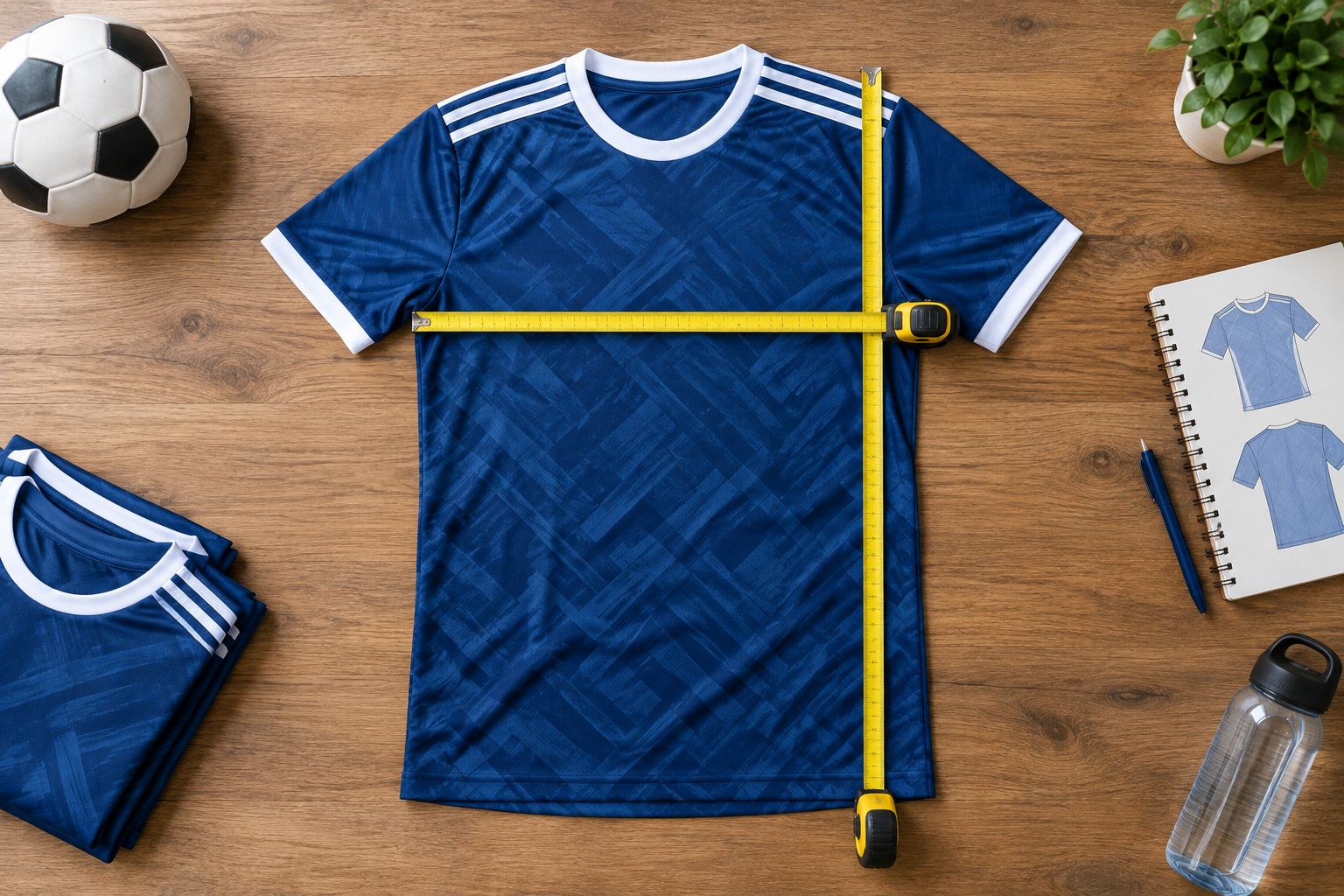
Begin with a tape measure and the size instructions for the exact garment being considered. Do not copy sizes from last season's shirts or assume that a familiar letter size means the same thing across suppliers.
Record measurements in centimetres. As a preparation checklist, check 3 dimensions—chest, waist and body length—then follow the supplier's instructions about which measurements determine the size. Do not confuse a body circumference with the width of a jersey laid flat.
Ask each player to confirm their selected size in writing. For junior players, involve a parent or guardian; for players wearing an approved base layer, check the intended combination rather than guessing how much extra room is needed.
Use the size chart attached to the proposed jersey.
Label every measurement as body or garment measurement.
Record sizes against players, not just a squad total.
Confirm movement and coverage needs before selection.
Ask about sample or fitting arrangements without assuming they exist.
Keep garment measurements separate from body measurements when recording sizes.
5. Build a readable design and proof every detail
Sketch the design yourself before commissioning detailed artwork. Give the team name, crest and player number distinct areas so the committee can judge the information hierarchy without being distracted by decorative effects.
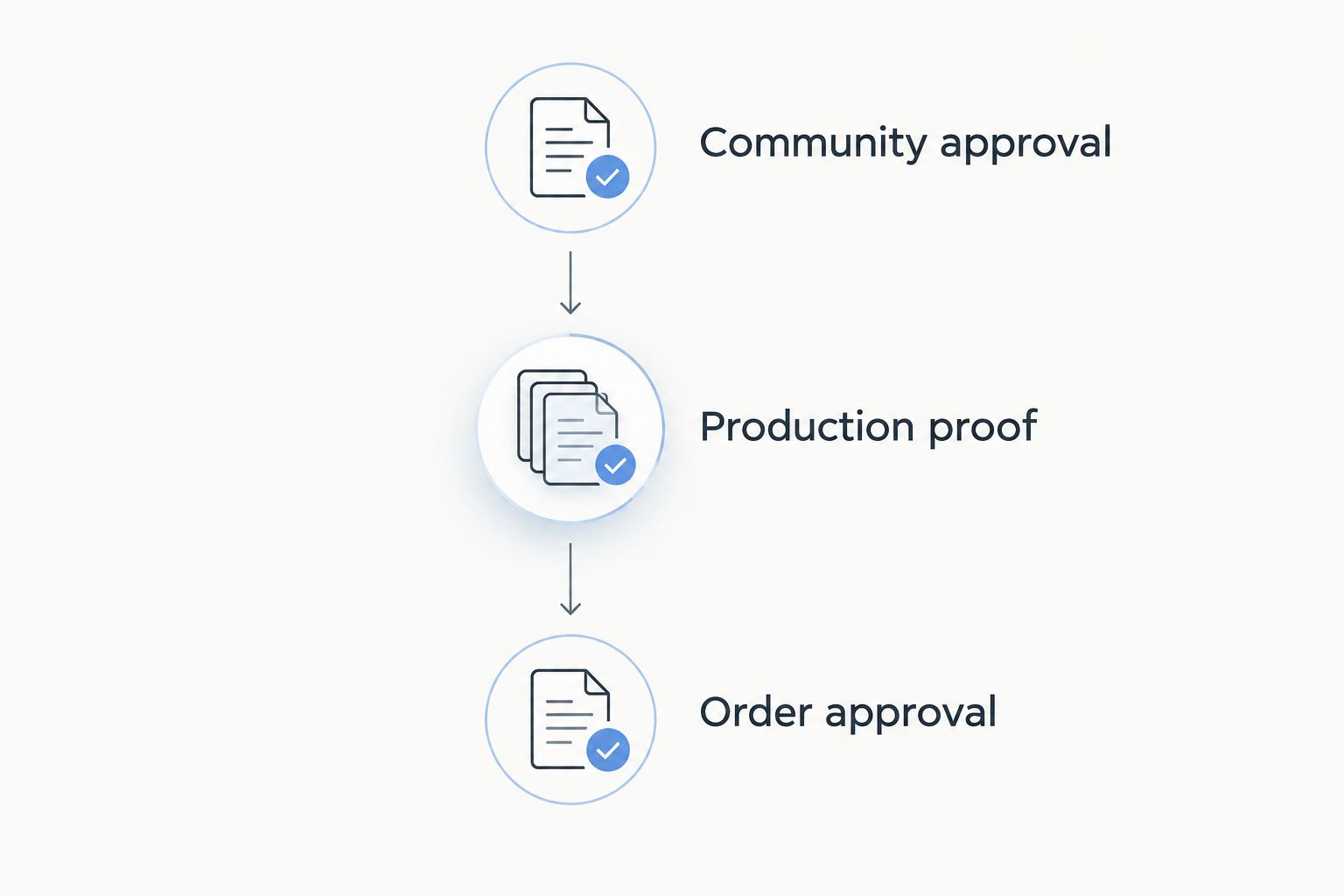
For your 2026 artwork, use 2 approval stages: community approval for identity and wording, then order approval for the complete production proof. Assign a named decision-maker to each stage so a late suggestion cannot silently replace an approved instruction.
Check the front, back and sleeves together. A sponsor logo that looks clear in isolation still needs reviewing beside numbers, seams and other artwork on the complete layout.
Separate the crest, religious wording and sponsor areas.
Check text contrast against every colour behind it.
Compare every player number with the roster.
Proof names and multilingual wording character by character.
Save the approved file with a clear revision label.
Approve the community identity before signing off the complete order proof.
6. Consolidate quantities and delivery instructions
Use 1 master roster for your 2026 order, not separate lists maintained by the coach, treasurer and team captain. Put the player, size, number, name-display choice and confirmation status on the same row.
Keep jersey requirements separate from shorts, socks and goalkeeper needs. A jersey listing does not establish that the rest of the kit is included, and a product title containing an item count does not establish a general minimum-order rule.
Give the supplier the actual Australian delivery postcode and the date the team needs the kit in hand. Ask for the proposed production and dispatch arrangements in writing; do not turn an estimate into a promise to players.
Reconcile the roster against the total jersey quantity.
Separate confirmed players from unresolved additions.
Identify the authorised purchaser and delivery recipient.
Check the full order inclusions and conditions.
Confirm the required arrival date before committing.
7. Plan handover, care and future additions
Create a simple issue register before the jerseys arrive. Record which player receives each size and number, then check the delivered garments against the approved order before distributing the full kit.
Follow the garment's care label rather than applying a generic washing temperature or drying method. If the kit belongs to the community organisation, explain who stores it and how players return it at the end of the season.
For a 2026 FE Custom soccer jersey order, retain the final proof and written specifications for future enquiries. Keeping those records makes your request clearer; it does not guarantee that the same garment, fabric or ordering conditions will remain unchanged.
Check delivered sizes, names and numbers against the roster.
Photograph discrepancies clearly before reporting them.
Share the supplied care instructions with players.
Record whether each jersey is owned or loaned.
Save the artwork and specifications with the club records.
Compare ordering options for your faith-based team
Choose the route that satisfies the approved brief, not the route with the most decoration. Each option below solves a different problem, and each still needs a fit and competition check.
Option
Best for
Main advantage
Key limitation
Existing compliant club kit
Teams whose current jerseys already meet the brief
Avoids redesigning an acceptable uniform
Existing sizes, quantities or artwork might not cover the new squad
Plain soccer jerseys with separately arranged decoration
Teams wanting a restrained identity
Keeps the initial design simple
You must coordinate garment suitability and decoration responsibilities
Online customisation through FE Custom
Australian teams wanting an online ordering route
Matches a remote buying process
Sizing, specifications and timing need written confirmation before purchase
A fully documented custom design brief
Teams requiring specific community artwork
Makes approval requirements explicit
More artwork decisions require more organised sign-off
If your faith community also runs basketball, brief that sport separately. Reversible basketball jerseys are a relevant option to assess for basketball programmes, but reversibility alone does not make a garment suitable for soccer fixtures.
Common mistakes faith-based leagues make
Assuming a religious design is automatically permitted
Community approval and competition approval answer different questions. Get both before ordering: the community authorises its identity, while the competition determines whether the proposed match kit is acceptable.
Treating one person's preference as everyone's requirement
Do not impose sleeve, fit or name-display choices based on assumptions about a congregation. Ask players privately, document the agreed requirements and check them against the available garment and league rules.
Letting sponsors approve the whole jersey
A sponsor should approve its own artwork, not replace the community's decision-maker. Keep sponsor permission separate from approval of religious wording, the crest and the final player information.
Ordering from an unconfirmed attendance list
A social-event response is not a confirmed playing roster. Collect individual participation and size confirmations before submitting quantities, especially when a community event includes both players and supporters.
Buying one garment type for every community sport
Keep soccer and basketball requirements distinct. A familiar team design is not evidence that the same cut, numbering layout or garment type meets both competitions' needs.
FAQ
What's the best way to choose soccer jerseys for a faith-based league?
Choose jerseys that meet your competition rules, individual fit needs and approved community identity. Start with a written brief, then confirm the garment and artwork requirements before ordering.
Can we put a religious message on our soccer jerseys?
Get competition approval for the exact religious message before ordering. Approval from your faith community does not replace the competition's rules on slogans, statements or images.
Should every player wear the same sleeve length?
Check your competition's uniform requirements before deciding sleeve arrangements. Collect individual coverage and layering needs privately, then ask the supplier which suitable options can be provided.
Is FE Custom suitable for Australian faith-based soccer teams?
FE Custom is an Australian online sports customisation store. Confirm the soccer garment, sizing, artwork and delivery requirements for your specific team before committing to an order.
Can we use reversible basketball jerseys for our soccer league?
Do not treat a reversible basketball jersey as approved soccer kit. Confirm the garment type and competition requirements; organise basketball uniforms separately if your community runs both sports.
How do we avoid ordering the wrong jersey sizes?
Use the exact garment's size chart and obtain each player's written size confirmation. Keep body measurements separate from flat garment measurements and check any intended base layers.
What should we send before requesting a team order?
Send the approved artwork brief, confirmed size-and-number roster, delivery postcode and required arrival date. Ask the supplier to confirm inclusions, conditions and proposed timing in writing.
One last thing
Decide who owns the jersey before printing a player's name. Personally named kit needs a different handover and reuse plan from numbered community-owned kit, so settle ownership while you can still change the brief.