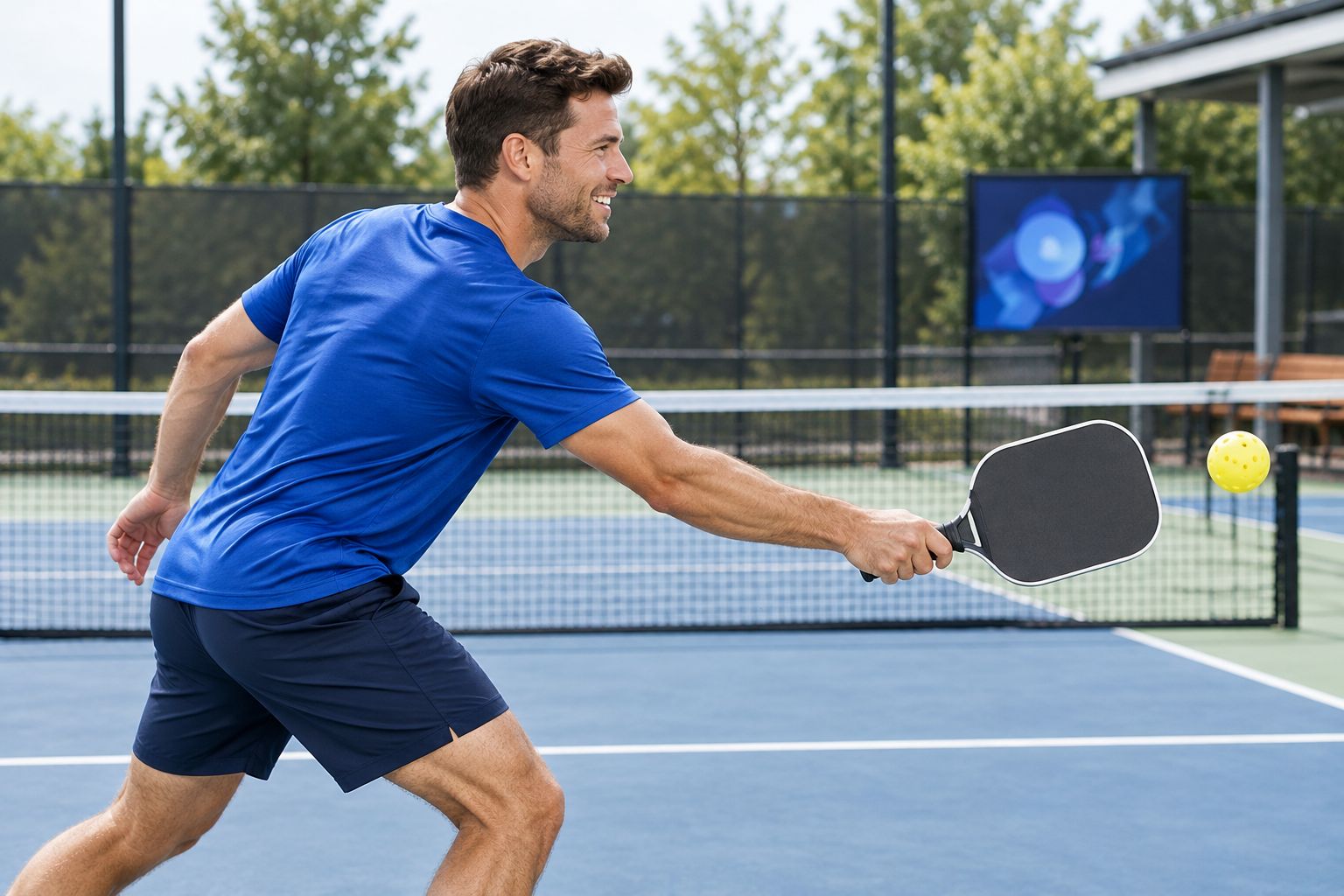
Custom pickleball uniforms for corporate leagues: complete 2026 guide
Corporate league pickleball uniforms are coordinated playing clothes designed to identify workplace teams and support comfortable movement on court. Choosing pickleball uniforms for corporate leagues means balancing employee fit preferences,...
Corporate league pickleball uniforms are coordinated playing clothes designed to identify workplace teams and support comfortable movement on court. Choosing pickleball uniforms for corporate leagues means balancing employee fit preferences, company branding and purchasing approvals—not simply putting a business logo on a shirt.
TL;DR
Choose pickleball uniforms for corporate leagues around fit, movement and league requirements before artwork.
FE Custom suits Australian teams seeking online sports customisation; confirm garment details before approving an order.
Custom pickleball shirts with player-chosen bottoms simplify coordination without imposing identical outfits.
Approve the roster, artwork and delivery arrangements separately before committing your corporate team.
Why pickleball uniforms matter for corporate leagues
A workplace team needs clothing that works for employees with different bodies, playing experience and comfort preferences. Your purchasing process also needs to satisfy the person approving the company logo and the person authorising the order.
For your 2026 league, treat the uniform as playing clothing first and corporate merchandise second. A tidy design does not compensate for a shirt that pulls across the shoulders during a swing.
FE Custom is best for Australian teams seeking online sports customisation. The online-only model means you need to resolve sizing and garment questions remotely rather than relying on an in-store fitting.
The practical goal is straightforward: give employees a recognisable team identity without making participation depend on wearing an uncomfortable cut. Agree on the essential visual elements, then let fit decisions follow individual measurements.
How to organise your corporate pickleball uniforms
Define the league requirements before choosing clothing
Start with a shared document and the competition organiser’s current instructions. Record what the league actually requires instead of importing uniform rules from another sport or assuming matching shorts are compulsory.
Ask about colour restrictions, identification requirements and any clothing conditions specific to the venue. For an outdoor competition, discuss sun protection separately; a short-sleeved team shirt is not a complete sun-protection plan.
Build your 2026 brief around the first fixture, the playing environment and confirmed participants. Separate compulsory requirements from preferences so a late design suggestion does not become an unnecessary purchasing condition.
Record the league name, venue and first fixture date.
Ask the organiser to confirm clothing requirements in writing.
Identify whether play is indoors, outdoors or across both settings.
Separate required team identifiers from optional decoration.
Choose whether the order covers shirts only or a coordinated outfit.
Collect measurements and fit preferences privately
Use a simple form before selecting sizes. Ask each employee for the measurements required by the specific garment’s size chart, their preferred fit and whether they want help checking the chart.
Do not convert everyday clothing sizes directly into team-shirt sizes. A medium label alone does not establish how a particular garment fits, and measurements taken from a shirt are not interchangeable with body measurements unless the chart says so.
Keep individual measurements out of general workplace chat. Give the ordering coordinator access and share only the information needed to process the order. Employees should also choose their preferred cut rather than having it assigned by a manager.
Follow the selected garment’s measurement instructions exactly.
Record measurements in centimetres where the chart uses centimetres.
Distinguish body measurements from flat garment measurements.
Ask each player to confirm their own size selection.
Restrict access to the completed sizing record.
Choose the ordering route around your team's needs
Begin with the manual approach: write a garment checklist and assess each candidate against it. Existing exercise tops with an agreed colour can suit a casual trial, while a custom shirt creates a more consistent team identity.
Once your checklist is settled, FE Custom’s pickleball shirt listings provide an online starting point for comparing named designs. Use the listings to narrow your enquiry, then confirm the selected garment’s sizing, fabric and customisation details before approval.
The supplied catalogue contains pickleball T-shirts, but a product name does not establish stretch, moisture management or sun protection. Ask for those details directly rather than treating sports terminology as evidence of performance.
Define the required sleeve style and preferred coverage.
Check the size chart for each selected garment.
Request fabric composition and care information.
Ask how your artwork will be applied.
Confirm whether different selected cuts can share coordinated artwork.
Test movement before signing off the fit
Use a comfortable exercise shirt as your starting reference, following the supplier’s measurement method. If you can assess a sample, test the actual playing movements rather than judging fit while standing still.
Run through 3 movement checks: a serving motion, a forward reach and a low ready position. These are a practical fitting routine, not a certification test. Watch for shoulder restriction, a rising hem or a neckline that becomes uncomfortable.
For your 2026 team, prioritise movement and coverage over a tightly matched silhouette. Different cuts can still look coordinated when the colours and logo treatment agree. Confirm any sample arrangements directly; do not build your schedule around an assumed fitting service.
Check shoulder freedom during a serving motion.
Reach forward without pulling the shirt into place.
Bend into a ready position and assess coverage.
Check sleeve and neckline comfort throughout the sequence.
Record any fit concern before approving the size list.
Assess shirt fit during playing movements, not just while standing still.
Approve branding without overcrowding the shirt
Create a basic front-and-back layout before requesting finished artwork. Mark the company logo, team name and any optional player identification so your internal approver can assess the hierarchy without being distracted by decorative detail.
Appoint 1 coordinator and require 2 approvals: one for brand use and one for the player roster. These are recommended responsibilities, not league rules. Keeping them distinct prevents a correct logo proof from being mistaken for approval of every employee’s spelling and size.
Use company-approved artwork and obtain permission for any external sponsor marks. For your 2026 uniform, decide whether a season date genuinely helps; permanent event-specific text makes the design less reusable.
Select the primary team identifier.
Supply the company-approved logo file.
Confirm the permitted colours and logo treatment.
Check names and optional numbers against the roster.
Obtain written approval of the final front-and-back proof.
Confirm the order and handover plan in writing
Use a spreadsheet to reconcile the approved roster with the final order. Keep design approval, order details and delivery arrangements together so finance and the team coordinator are working from the same information.
For an Australian workplace, confirm the delivery address, postcode and the person receiving the parcel. Ask the supplier to distinguish production timing from transit timing and explain what starts the production process. A fixture date in your brief is not a confirmed delivery commitment.
Before placing the order, agree on how late joiners, replacements and corrections will be handled. Ask about the terms for customised goods directly; do not assume the arrangements match those for undecorated clothing.
Reconcile garment quantities with the approved player list.
Confirm the invoicing entity and required purchasing reference.
Obtain the final artwork and order summary in writing.
Confirm production and delivery arrangements for your postcode.
Record the process for corrections, replacements and later orders.
Check each garment against the roster when it arrives.
Compare uniform options for your workplace team
For a first corporate season, assess a custom shirt with player-chosen bottoms before requiring a complete matching outfit. It keeps the team identifier consistent while leaving employees room to choose comfortable lower-body clothing, subject to league rules.
The named shirts below are catalogue references, not evidence of a particular fabric performance or fit. Their supplied descriptions identify design fields, including base colour and team-name styling; confirm the specification for your proposed order.
Option
Best for
Practical advantage
Key limitation
Existing exercise tops in an agreed colour
A casual workplace trial
Uses clothing employees already know fits
Colours and logo presentation will differ
Custom pickleball shirt with player-chosen bottoms
A corporate team seeking a shared identity
Coordinates the visible team identifier without prescribing every garment
Bottoms will not necessarily match
Fully coordinated playing outfit
A team that requires a consistent full-kit appearance
Gives you a defined outfit brief
Adds separate fit and specification decisions for each garment
Dream Team - Womens Pickleball T-Shirt (2 items)
Organisers assessing a women's pickleball T-shirt listing
Supplied description includes base-colour and team-name design fields
Measurements, fabric and proposed artwork need confirmation
All Aces - Mens Pickleball T-Shirt (1 items)
Organisers assessing a men's pickleball T-shirt listing
Supplied description includes base-colour and team-name styling fields
The listing title does not establish suitability for every player
Do not interpret item counts in catalogue titles as a minimum-order policy or a recommendation for your roster. Confirm the scope of your own order and compare the selected cuts using their individual size charts.
Brand approval and garment fit are different decisions. Your marketing lead can approve the company mark, but each player needs to confirm their own garment choice and size. Keep those sign-offs separate even when the same manager authorises the purchase.
Treating a work polo as automatically suitable for play
A corporate appearance does not establish shoulder freedom or comfort during pickleball. Assess any proposed shirt through serving, reaching and bending before selecting it. If employees also need presentation clothing, write that as a separate requirement rather than expecting one garment to satisfy both briefs without checking.
Printing personal details without asking employees
A surname or workplace nickname is not an automatic requirement for a social team shirt. Ask each participant what they consent to display and confirm whether the league requires identification. Avoid adding job titles that turn a recreational outfit into an unnecessary workplace hierarchy.
Ordering around an unconfirmed fixture deadline
An event date does not establish the supplier’s production or transit schedule. Confirm both before committing, particularly when the receiving office and playing venue are different. Record who will distribute the garments so delivery to reception is not mistaken for delivery to every player.
Making the design too specific to reuse
A department name, campaign slogan or season date can tie the uniform to a short-lived workplace structure. For your 2026 league, decide which identifiers need to remain useful after staff changes. Keep the approved artwork and garment details together for future enquiries.
FAQ
What's the best uniform setup for a new corporate pickleball team?
Start by assessing a coordinated pickleball shirt with player-chosen bottoms, subject to league requirements. It establishes a team identity while letting employees choose lower-body clothing that suits their fit preferences.
Do corporate pickleball leagues require matching uniforms?
Your competition organiser determines the clothing requirements for your corporate pickleball league. Ask for the current instructions before ordering rather than assuming matching outfits or player numbers are compulsory.
Can employees choose different shirt cuts and still look like a team?
Different shirt cuts can form a coordinated team outfit through shared colours and artwork. Confirm that the selected garments support the proposed design, and have each player approve their own fit.
Is FE Custom suitable for Australian corporate pickleball teams?
FE Custom is an Australian online sports customisation store with pickleball T-shirt listings. It suits teams considering online ordering, but you need to confirm garment specifications, sizing and order arrangements before approval.
How do I choose sizes for employees who normally wear different brands?
Use the size chart for the specific garment rather than transferring sizes from another brand. Follow its measurement instructions and have each employee confirm the resulting selection privately.
Should corporate pickleball shirts have employee names on them?
Print employee names only when the participant agrees and the design serves your team's needs or league requirements. Confirm spelling and consider whether personalised shirts suit your plans for replacements and reuse.
How early should I order corporate pickleball uniforms?
Set the ordering date from the supplier's confirmed production and transit arrangements, working back from your first fixture. Leave room in your internal process for sizing, artwork approval and checking the delivered order; do not assume a standard turnaround.
One last thing
Approve a replacement brief alongside the original uniform. Save the final artwork, garment reference, size-chart version and approved colour details in one shared location. A new employee should not have to reconstruct your team’s uniform from a photograph.
Keep personal measurements separate from that reusable brief. The design belongs in your team records; individual sizing information only needs to remain accessible to the people handling it.