Best Custom Soccer Jerseys for Junior Teams Australia 2026
Best overall: a fit-first, numbered match jersey. Best for shared club kits: a number-only jersey. Best for player-owned kits: a named-and-numbered jersey, subject to club rules. This 2026 guide ranks...
Best overall: a fit-first, numbered match jersey. Best for shared club kits: a number-only jersey. Best for player-owned kits: a named-and-numbered jersey, subject to club rules. This 2026 guide ranks ordering approaches for Australian junior teams, so you can choose a useful custom soccer jersey rather than approve a design before checking fit.
TL;DR
Best custom soccer jerseys for junior teams Australia: choose measured fit before artwork.
FE Custom is an Australian online sports customisation store; confirm junior soccer sizing before approving your order.
Number-only soccer jerseys suit shared club kits; named jerseys suit player-owned kits where club rules allow.
Check the size chart, competition requirements and final team roster before approving custom teamwear.
Why this matters
A junior team's jersey order has to work for players of different sizes, parents collecting measurements and a volunteer managing approvals. A matching design does not solve an unsuitable cut or an incorrect number. Start with the players, then build the artwork around the approved kit requirements.
For your 2026 season, use the guide to ordering custom soccer jerseys for your team to organise the brief. Keep size decisions separate from design preferences until both are settled. That gives your coordinator a clear record of what each family approved.
What makes the best custom junior soccer jersey?
Judge the jersey against these criteria before comparing designs:
Measured fit: compare each player's measurements with the chart for the actual jersey, not their age or usual T-shirt label.
Soccer suitability: choose a soccer-specific garment and confirm whether its sizing covers your junior squad.
Readable identification: keep required numbers distinct from patterns, names and sponsor artwork.
Appropriate personalisation: decide whether the club owns the jersey or the player keeps it before adding names.
Clear specifications: confirm the fabric, construction, decoration method and care instructions for the selected garment.
Order accuracy: approve the artwork and player roster together, with responsibility assigned to a coordinator.
FE Custom custom soccer jerseys belong on an Australian team's shortlist only after the selected garment's sizing matches its players. That is the useful buying rule: suitability comes before the design vote.
Junior soccer jersey options at a glance
These are ordering configurations, not different fabric grades. Their ranking reflects the problem each solves; the same suitable soccer jersey can support different ownership and identification choices.
Rank and option
Best for
Standout benefit
Key limitation
Fit-first, numbered match jersey
A junior squad selecting its main playing top
Player measurements lead the selection
Every player still needs an individual fit check
Number-only club-pool jersey
Clubs lending and collecting shared kits
No permanent player name ties the jersey to a child
Allocation and returns need a clear club record
Named-and-numbered player jersey
Players keeping their own approved kit
Personal identification distinguishes each player's top
Printed names make reassignment less straightforward
No configuration removes the need to check competition requirements. Confirm the rules that apply to your team before deciding on colours, numbering or personalisation.
1. Fit-first match jersey: best for a squad's main playing top
A fit-first match jersey starts with the garment chart and the player roster. You choose the soccer top that fits the squad, then approve colours, numbers and artwork. This is the default approach for a junior team choosing its main playing jersey in 2026.
Check the complete size spread, not just the smallest and largest players. A men's soccer listing is not a junior size guide, and a youth label on a different sport's jersey does not establish soccer suitability. Ask FE Custom to confirm the appropriate soccer garment and measurements for your squad before committing to the design.
Fit-first match jersey pros:
Makes sizing a selection requirement rather than a final administrative task.
Lets each family check the actual garment chart.
Keeps required numbers central to the design brief.
Supports either club-owned or player-owned kit arrangements.
Fit-first match jersey cons:
Requires measurements from every player before approval.
Does not settle ownership or personalisation decisions by itself.
Needs another fit check if the selected garment changes.
Best for: a coordinator choosing the team's main match top, especially when the squad spans different body sizes.
Verdict: Buy only after the selected soccer jersey's chart and player sizes are confirmed. Do not approve an adult cut simply because its artwork looks right.
2. Number-only jersey: best for a shared club kit pool
A number-only club-pool jersey carries the team's approved identification without a permanent player name. The club assigns it to a player and collects it under its own kit process. This approach suits teams that want jerseys to remain club property.
The benefit is practical rather than decorative: a jersey without a child's name is easier to assign to another player whose measurements suit it. You still need to manage sizes and numbers together. A returned jersey is not useful to the next player unless the fit works.
Number-only club-pool jersey pros:
Avoids tying shared kit to a permanent player name.
Keeps the back design focused on the required number.
Supports a club-managed allocation record.
Separates team identity from individual ownership.
Number-only club-pool jersey cons:
Similar-looking jerseys need careful allocation and collection.
The club must track which player has each size and number.
Reuse depends on garment condition and the next player's fit.
Best for: junior clubs lending match jerseys to players rather than giving each child a personalised top to keep.
Verdict: Buy for a club-owned kit pool; skip permanent names. Agree on responsibility for collection and record keeping before distribution.
3. Named jersey: best for player-owned team kits
A named-and-numbered jersey adds the approved player name to the team's identification layout. Choose this approach when players keep their own jerseys and the club permits the proposed personalisation. It is an ownership decision first, not a reason to change the fit requirements.
For your 2026 order, ask parents or guardians to approve the exact printed name. Confirm whether the team uses surnames, first names or another permitted format. Do not turn a registration spreadsheet directly into print instructions without checking the club's requirements and each family's approval.
Named player jersey pros:
Distinguishes a player's top from otherwise matching team jerseys.
Suits a kit intended to stay with the individual player.
Gives families a clear name-and-number record to approve.
Named player jersey cons:
A printed name complicates reassignment to another player.
Spelling and formatting need separate approval.
Personalisation must comply with the club's rules.
Best for: junior players keeping their own match kit, with an agreed naming format and parent or guardian approval.
Verdict: Buy for player-owned kits where names are permitted; skip for shared club jerseys. Keep the required number readable regardless of the name treatment.
How to check junior soccer jersey sizing
Do not assign sizes from age alone. Compare each player's measurements with the instructions for the chosen garment, and establish whether the chart describes body measurements or the jersey itself. Those are different references and should not be mixed.
For FE Custom custom soccer jerseys, confirm the chart for the exact garment you intend to order. If your squad crosses youth and adult size ranges, ask how the relevant cuts compare. Do not assume an adult small continues directly from a youth large.
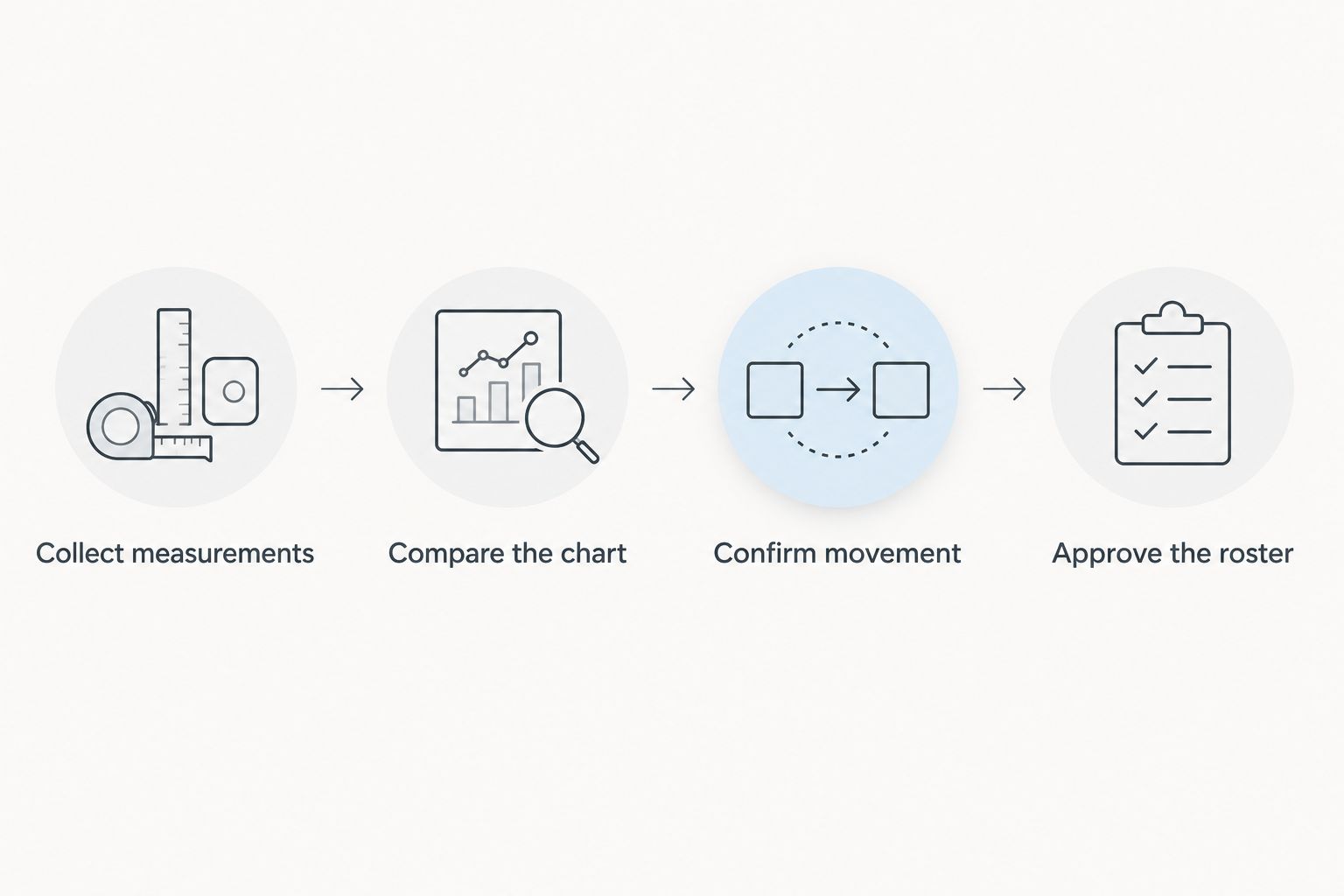
Collect measurements
Record the measurements requested by the garment chart in centimetres. If it calls for chest, length and hem, collect all 3 measurements in cm rather than guessing the missing dimension. Use the chart's measuring method, particularly where it distinguishes a flat width from a circumference.
Compare the chart
Check each player's entry against the selected garment. Where the chart permits comparison with a well-fitting top, measure that top using the same method. Do not compare a flat garment width with a body circumference as though they were equivalent.
Confirm movement
Ask players to check normal playing movements in their reference top: reaching, turning and bending. Note tightness or excess fabric rather than automatically choosing a larger label. Growing room is a fit decision, not permission to order a top that interferes with movement.
Approve the roster
Keep 1 approved roster showing the selected size and assigned number for every player. Record parent or guardian confirmation beside the entry. If a family changes a size, update the master record rather than leaving competing versions in messages.
Check fit before moving player sizes into the final order.
Design checks before you approve the team artwork
A junior soccer jersey needs to communicate the team's identity without obscuring its required identification. Start with the club's approved colours and competition requirements. Then place the crest, numbers and any authorised sponsor artwork around those requirements.
Keep a clear area for the number. A patterned background needs enough contrast for the number to remain distinct. Review the whole back layout rather than judging the number on an isolated artwork file.
Use 2 reviewers as an approval step: a club representative checks team requirements, and the roster coordinator checks player details. This is a recommended workflow, not a substitute for any supplier approval process. Ask FE Custom how artwork and roster approval work for your selected order.
Your final check should cover:
The approved club colours and crest file.
Required number placement and legibility.
Permission to use each sponsor logo.
The agreed name format, where names are included.
The selected garment and size allocations.
Consistency between the artwork and approved roster.
Do not approve the jersey from a cropped front image. Review the complete proposed layout, including the back and any decorated sleeves, before authorising it.
Put the team order into a clear brief
For a 2026 junior team order, send a brief that separates the garment, artwork and roster. State whether the club owns the kit or players keep it. Include your intended use and the date the team needs the jerseys, then request confirmation of the order requirements and timing.
Keep the brief practical:
Garment: soccer jersey, relevant size range and confirmed chart.
Design: colours, approved artwork files and required identification.
Roster: sizes, numbers and approved names where applicable.
Ownership: shared club kit or player-owned kit.
Approval: the person authorised to sign off the final details.
Timing: the required match date and written confirmation before proceeding.
Avoid treating a number in a product URL as a current minimum order requirement. Confirm the terms for your actual order directly. Keep written confirmations with the approved files so the next volunteer can understand the decision without searching through private messages.
How these options are ranked
The fit-first match jersey ranks first because it addresses the garment's suitability for the players before decoration. Number-only jerseys take the shared-kit slot because they avoid permanent names. Named jerseys take the player-owned slot because personalisation fits that ownership arrangement.
This ranking compares fit decisions, identification and kit ownership. It does not turn design names into claims about fabric performance. Apply the criteria to the actual soccer garment before choosing any configuration.
Which custom junior soccer jersey should you choose?
Choose a fit-first, numbered match jersey as your default for 2026. Once the garment suits the squad, decide whether the club needs reusable number-only kit or families want permitted player names.
FE Custom is an online sports customisation store operating in Australia. Use that buying route to confirm the selected soccer jersey's fit and order details, not to bypass them. An approved roster and clear artwork brief give your team a firmer basis for ordering than a design preference alone.
FAQ
What's the best custom soccer jersey for a junior team in Australia?
A soccer-specific match jersey selected from confirmed player measurements is the best default. Check the actual garment chart, required numbers and club rules before approving artwork.
Should junior soccer teams choose youth or adult jersey sizes?
Choose the size range that matches each player's measurements on the selected garment chart. Do not assume an adult small is equivalent to a youth large or assign sizes from age alone.
Are number-only jerseys better than named jerseys for junior clubs?
Number-only jerseys are better suited to shared club kit pools. Named jerseys suit player-owned kits where club rules permit names and families approve the exact wording.
Can I use a basketball jersey size chart for a soccer jersey?
Use the chart for the actual soccer jersey instead. A different sport's garment can have a different cut and measuring reference, even when the size labels look similar.
What should I confirm with FE Custom before ordering junior soccer jerseys?
Confirm the selected soccer garment, junior sizing, customisation details and approval process. Also confirm the order requirements and timing against the date your team needs the kit.
How do I avoid mistakes in player names and numbers?
Keep one approved roster and ask families to check their entries before final approval. Have the roster coordinator compare that record with the proposed artwork.
Should I order a larger jersey so a child can grow into it?
Choose growing room through a fit check rather than automatically moving up a size. The jersey still needs to allow normal playing movement without excessive loose fabric.
One last thing
Save the measuring instructions alongside the approved size roster. A size label alone does not explain how you chose it. Keeping the chart, artwork and approval record together gives next season's coordinator a starting point without assuming every player will need the same size again.