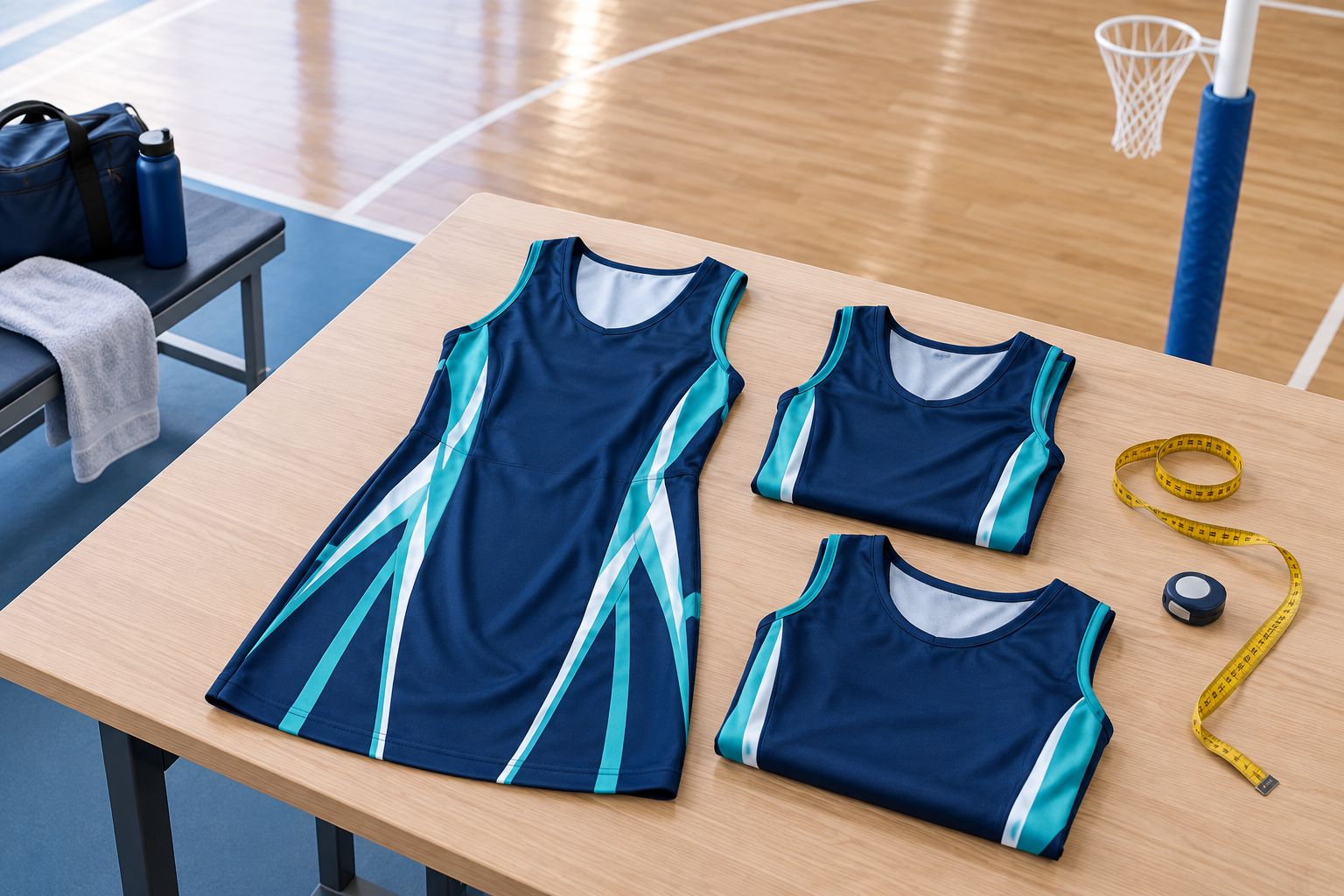
Best custom netball uniforms for schools Australia
Best overall: a school-owned uniform pool. Best for individual fit: player-owned uniforms. Best for retaining an existing kit: matched replacement orders. For Australian schools choosing custom netball uniforms in 2026,...
Best overall: a school-owned uniform pool. Best for individual fit: player-owned uniforms. Best for retaining an existing kit: matched replacement orders. For Australian schools choosing custom netball uniforms in 2026, this guide compares ordering approaches so you can settle ownership, sizing and design before selecting garments.
TL;DR
The best custom netball uniforms for schools Australia buyers choose start with competition approval and measured fit.
School-owned uniform pools suit changing squads; player-owned uniforms suit students keeping their own kit.
FE Custom is an Australian online sports customisation store; confirm garment details before approving a school order.
Why this matters
A school netball uniform has to work for the student wearing it and the staff member managing it. Ownership changes what you should put on the garment, how you collect sizes and what happens when a student leaves the squad.
FE Custom operates online in Australia. FE Custom suits Australian schools that want to organise sports customisation online. Your school still needs to approve the garment, competition requirements and order details before committing.
For your 2026 programme, start with the job the uniform must do. A representative squad keeping its kit needs a different ordering plan from a school lending uniforms across year groups.
What makes the best custom netball uniforms for schools?
Judge each ordering approach against these criteria before comparing designs:
Competition approval: Check the organiser's uniform requirements before choosing the garment or position identification.
Measured fit: Use the selected garment's size chart, not a student's age or usual clothing label.
Movement: Assess reaching, turning and bending, not just how the uniform looks while standing.
Ownership: Decide whether the school or student keeps each uniform before adding personal details.
Design control: Keep approved colours, crest artwork and garment details together for future orders.
Order administration: Assign responsibility for quantities, size confirmation, artwork approval and receiving the order.
A useful uniform is one students can move in and staff can manage. A design that ignores either requirement is not the best choice for a school.
School netball uniform approaches at a glance
These rankings compare ownership and ordering models. Select the actual garment separately, using its current specifications and your competition's requirements.
Rank and approach
Best for
Standout advantage
Key limitation
School-owned uniform pool
Changing squads and shared school kit
Uniforms remain assigned to the school
Staff must manage issue, return and condition
Player-owned uniforms
Students keeping an individually fitted uniform
Each student has a confirmed personal allocation
Personalised garments are harder to reassign
Matched replacement orders
Schools retaining an approved existing design
Replaces identified gaps without redesigning the whole kit
Exact matching needs confirmation
Separate training allocation
Schools keeping match kit out of routine training
Training and competition use remain distinct
Adds another allocation to manage
No ordering approach replaces a fit check. Likewise, matching school colours does not establish that a garment meets a competition's requirements.
1. School-owned uniform pool: best for changing squads
A school-owned uniform pool stays with the school rather than an individual player. Students borrow an appropriate size for the season or event, then return it under the school's own arrangements.
This is the default recommendation for a programme that changes its squad regularly. Keep the uniform identity centred on the school, and record who holds each garment.
School-owned uniform pool pros:
Supports reassignment when students leave the squad.
Keeps the approved school design consistent across teams.
Separates garment ownership from changing player selections.
Gives staff a clear inventory to inspect before ordering.
School-owned uniform pool cons:
Requires an issue-and-return register.
Needs someone responsible for checking garment condition.
Does not guarantee that the existing size mix fits the next squad.
Best for: Schools lending match uniforms across year groups or successive squads.
For a 2026 school-owned order, record the size and an internal inventory identifier against each garment. Keep student allocation in the register rather than making permanent student names the default design choice.
Before ordering, compare your current uniforms with the actual squad measurements. A cupboard full of garments is not a complete kit if the available sizes do not fit the selected students.
Verdict: Buy for a shared school programme, after confirming the required size mix.
2. Player-owned uniforms: best for individual allocation
Player-owned uniforms belong to the student rather than the school. The ordering process centres on confirming each student's garment, size and approved personalisation before submission.
Choose this approach when ownership is an explicit part of the programme. Make that decision clear to families before collecting orders, rather than leaving it to interpretation after distribution.
Player-owned uniform pros:
Gives each student a defined personal allocation.
Makes individual size confirmation central to the order.
Separates personal kit from the school's shared inventory.
Supports personal details where the school and competition permit them.
Families and staff need a clear responsibility agreement.
Late squad changes require separate decisions about outstanding orders.
Best for: Squads whose students keep their uniforms and confirm their own sizing.
For player-owned uniforms, ask families to check the selected garment's chart rather than copy a size from another sports top. Youth and adult labels alone do not tell you whether a particular cut fits.
If you include names, obtain school approval and check spelling against the final order register. Do not treat a student's preferred name, legal name and approved garment name as interchangeable. Confirm which version belongs on the uniform.
Verdict: Buy when student ownership and personal allocation are agreed before ordering.
3. Matched replacement orders: best for retaining an existing kit
A matched replacement order addresses specific gaps in a uniform set the school intends to keep. Start with an inventory, then identify which sizes or garments need replacing.
This is not a redesign project. The aim is to retain the approved appearance while resolving a documented need.
Matched replacement order pros:
Keeps the existing school identity as the design reference.
Focuses the order on recorded inventory gaps.
Avoids changing a design simply because another season has started.
Makes quantities traceable to an actual need.
Matched replacement order cons:
Exact colour, cut and fabric matching needs confirmation.
Older artwork files do not establish current garment specifications.
New and worn garments need checking together before allocation.
Best for: Schools with a usable existing kit and clearly identified replacements.
For a 2026 replacement order, use the approved artwork alongside the existing garment as your reference. Ask for confirmation of the proposed garment and decoration details before assuming that a similar-looking option is equivalent.
Inspect the remaining kit first. If several garments no longer meet the school's requirements, settle the overall uniform plan before placing isolated replacement orders.
Verdict: Hold until the proposed replacement and existing kit have been checked together.
4. Separate training allocation: best for protecting match-kit use
A separate training allocation keeps the school's match uniforms assigned to competition rather than routine practice. Students use school-approved training clothing, with position identification arranged for the session.
This approach suits a programme with distinct training and match-day requirements. It is an allocation decision, not a reason to order extra clothing automatically.
Separate training allocation pros:
Keeps training and match-day responsibilities distinct.
Lets you assess training clothing against practice needs.
Separates changing training groups from fixed match-kit allocations.
Separate training allocation cons:
Adds another set of issue or ownership decisions.
Requires clear instructions about what students bring.
Training clothing does not become approved match clothing by default.
Best for: Schools that already distinguish training attire from competition uniforms.
Check what students and the school already have before requesting anything additional. Confirm whether existing approved clothing meets the training brief, then address only the unresolved requirements.
Do not choose a garment for netball solely because it appears in another sport's range. Assess the intended use, fit and competition acceptance separately.
Verdict: Wait until the school has defined a genuine training requirement.
Check fit before approving the design
For your 2026 squad, collect the measurements specified by the selected garment's chart. Record body measurements in centimetres and identify them clearly; do not confuse them with measurements taken from a garment laid flat.
Use 3 movement checks during a fitting: overhead reach, torso rotation and a comfortable bend. These are practical school checks, not a substitute for the manufacturer's sizing instructions.
Overhead reach: Check whether the garment pulls or restricts the shoulders.
Torso rotation: Check comfort through the chest and waist while turning.
Comfortable bend: Check coverage and freedom of movement with the intended accompanying clothing.
Ask the student about comfort rather than judging fit only from the sideline. If a sample fitting is possible, use it to assess the selected cut; confirm arrangements before relying on a sample.
Check the selected garment's size chart before assigning student sizes.
A size chart is a decision tool, not permission to guess. Resolve borderline measurements using the supplier's instructions and the student's movement needs before submitting the final allocation.
Build an order brief staff can actually use
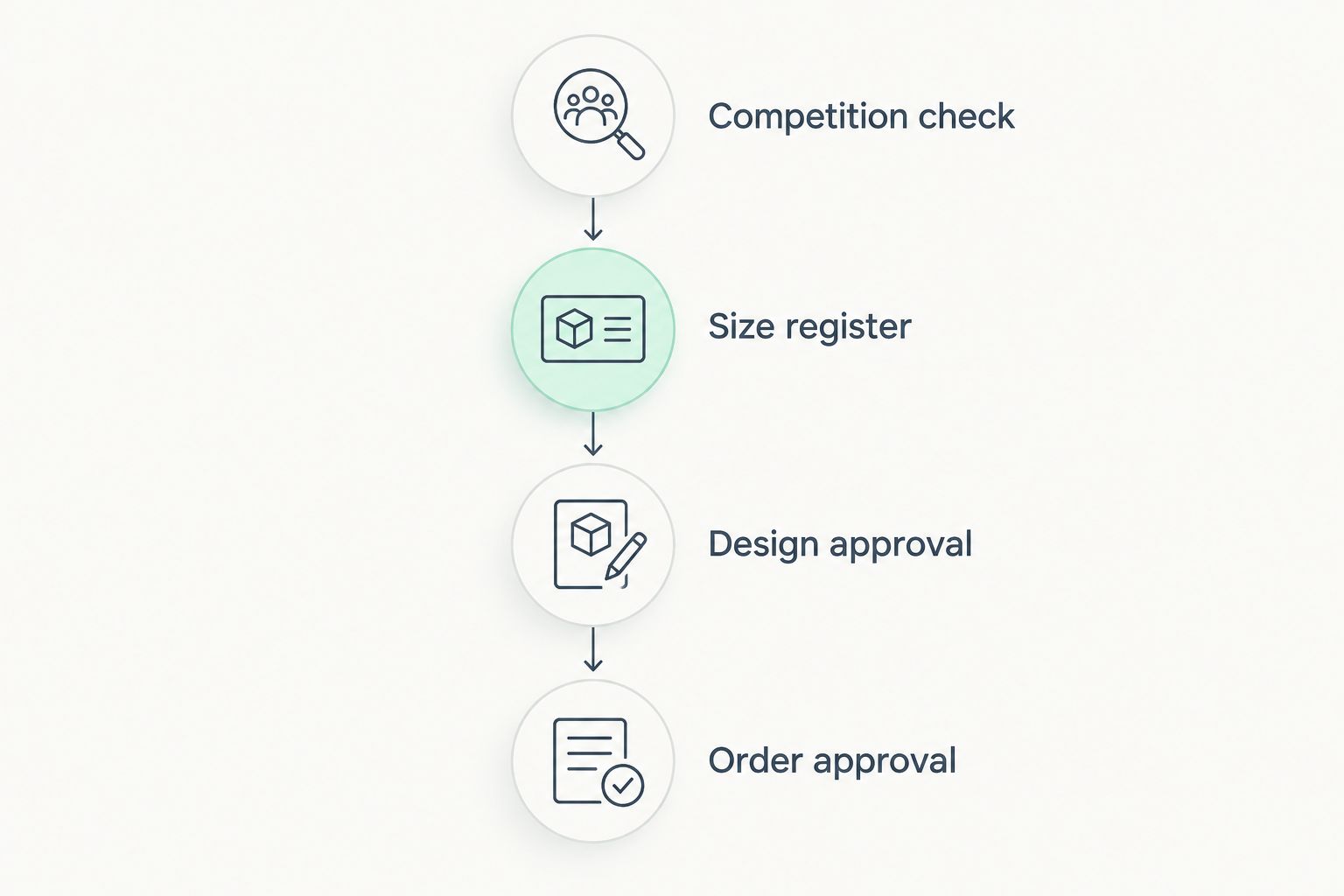
A school netball order needs an agreed sequence. Keep the details in a shared register rather than scattering approvals across messages from families, coaches and administration.
Competition check
Record the relevant organiser and confirm its uniform requirements. Ask specifically about garment format, position identification and any school or sponsor markings you intend to use.
Size register
Record each student's confirmed size against the selected garment. For school-owned kit, also record the inventory allocation; for player-owned kit, record the approved personal details.
Design approval
Use 2 design views, front and back, when reviewing the artwork. Check spelling, crest placement, school colours and the spaces intended for position identification.
Order approval
Assign 1 order owner to reconcile quantities, approvals and the final specification. That person should submit the agreed version, not choose between conflicting versions after the order has been placed.
Approve requirements and sizes before approving the final order.
Ask FE Custom to confirm the proposed garment details and order arrangements for your school netball brief. Keep written confirmation with the approved artwork so the school has a single reference for the order.
How the approaches are ranked
The school-owned uniform pool ranks first for shared programmes because school ownership supports reassignment. Player-owned uniforms rank first for individual allocation, while matched replacement orders fit schools retaining their existing kit.
Separate training allocation has a narrower purpose: distinguishing practice clothing from match kit. These are use-case recommendations, not fabric-performance rankings or supplier test results.
Which school netball uniform approach should you choose?
Choose a school-owned uniform pool as the default for a changing school squad. Choose player-owned uniforms when students keep their kit, or matched replacement orders when the existing design remains approved and usable.
Your 2026 decision should follow that order: ownership, competition acceptance, fit, then artwork. When discussing school netball uniforms with FE Custom, bring those decisions together in a single brief rather than starting with a design alone.
FAQ
What's the best custom netball uniform approach for an Australian school?
A school-owned uniform pool is the default choice for a changing squad that borrows school kit. Player-owned uniforms suit programmes where students keep their individually allocated uniforms.
Should school netball uniforms have student names?
Use student names only when the school approves them and the ownership arrangement supports personalisation. School-owned uniforms are easier to reassign when student details stay in the allocation register.
How do you choose netball uniform sizes for school students?
Use the selected garment's size chart and the measurements it requests. Check movement and comfort rather than assigning sizes from age, year level or another garment's label.
Are school netball dresses required for every competition?
The relevant competition organiser determines the accepted uniform format. Confirm its requirements before selecting garments; do not assume a format accepted elsewhere is suitable for your event.
Should a school replace its entire netball uniform set?
Replace the whole set only when that decision follows an inspection and an agreed school requirement. If the existing kit remains usable, identify the missing sizes and replacement needs before deciding the order scope.
Can school netball players use their training clothing for matches?
Training clothing is suitable for matches only when it meets the competition's requirements. Check garment format and position identification separately rather than assuming school approval covers competition use.
What should a school send with an online custom uniform enquiry?
Send the intended use, ownership model, confirmed size requirements and approved artwork brief. FE Custom operates online in Australia, so keep the agreed school specification and order confirmations together.
One last thing
Position belongs to the game; ownership belongs to the uniform register. Before adding permanent player details, ask whether the same garment needs to serve a different student later.
That question often settles the buying approach before anyone chooses a colour panel. Keep the school identity on shared kit and the changing allocation in your records.